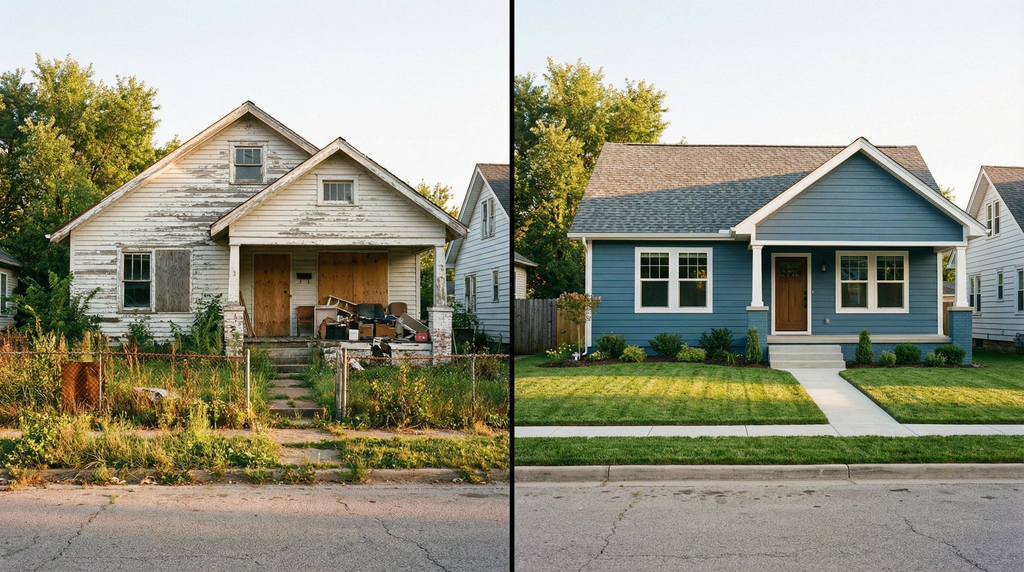
The BRRRR Strategy Explained: Buy, Rehab, Rent, Refinance, Repeat
Experienced real estate investors often look for ways to reuse their capital rather than leaving all their available cash tied up in a single property. One strategy designed around that goal is BRRRR: Buy, Rehab, Rent, Refinance, Repeat.
The BRRRR strategy involves purchasing a property that may benefit from improvements, renovating it, placing a tenant, refinancing based on the property’s value and the lender’s requirements, and potentially using some of the proceeds to help fund another investment.
When the numbers work, this approach may allow an investor to build a rental portfolio over time. However, it also involves financing risk, renovation uncertainty, market exposure, and the possibility that the expected refinance will not be available.
Understanding each stage—and planning for what can go wrong—is essential before committing your money.
What Does BRRRR Mean?
Buy: Purchase a property with a realistic opportunity to improve its condition, functionality, rental appeal, or value.
Rehab: Complete the necessary repairs and improvements while staying within a carefully developed budget.
Rent: Prepare the property for occupancy, comply with applicable rental requirements, and secure a qualified tenant under a lawful lease.
Refinance: Apply for new financing after improvements, subject to the lender’s underwriting, appraisal, loan-to-value limits, and other requirements.
Repeat: If the property performs as expected and refinancing leaves sufficient capital available, consider using some of the proceeds toward another acquisition.
The final step is not automatic. A lender may decline the refinance, appraise the property below expectations, or offer less financing than anticipated. Investors should never purchase a property assuming that a particular amount of cash will definitely be returned to them.
1. Buy the Right Property at the Right Price
The BRRRR strategy starts with the acquisition. A property that is too expensive, has extensive hidden damage, or has limited rental demand can undermine the entire plan.
Look for properties where the purchase price and realistic renovation budget leave room for the expected completed value and long-term rental performance.
Before making an offer, investigate:
- Comparable sales for similar properties in the same market.
- Achievable rents supported by current local evidence.
- The property’s structural and mechanical condition.
- Estimated renovation costs and likely permit requirements.
- Property taxes, insurance, utilities, and other holding costs.
- Financing terms and the expected time needed to complete the work.
- Local rental regulations and the property’s suitability for the intended use.
Avoid basing your purchase price solely on an optimistic after-repair value. A deal needs to work under conservative assumptions, not just under the best possible outcome.
2. Develop a Detailed Rehabilitation Budget
Renovation costs can quickly change the financial picture. Obtain contractor estimates, distinguish essential repairs from cosmetic improvements, and include a contingency for unexpected conditions.
Depending on the property, the scope may include roofing, plumbing, electrical work, heating and cooling systems, windows, flooring, kitchens, bathrooms, structural repairs, and exterior maintenance.
Confirm whether permits or inspections are required before work begins. Unapproved improvements can create safety issues, additional costs, and complications when you later refinance or sell.
Track actual spending against the budget. If the project begins to exceed expectations, reassess the remaining work and the investment’s projected returns rather than continuing simply because money has already been spent.
3. Understand the After-Repair Value
After-repair value, commonly called ARV, is an estimate of what a property may be worth after the planned improvements are complete.
ARV should be supported by relevant comparable sales, not simply by the amount you spent on renovations or the price of the most expensive nearby home.
Consider differences in property size, condition, layout, location, age, and features. If the property is unusual or the available comparable sales are limited, your estimate may carry more uncertainty.
An appraiser working for a refinance lender may reach a different value from your estimate. Your financial plan should allow for that possibility.
4. Make Sure the Property Can Support Rental Operations
A successful BRRRR project must work as a rental—not merely look attractive after renovation.
Estimate achievable monthly rent and subtract expected operating expenses, including property taxes, insurance, maintenance, vacancy, capital expenditures, management, and any owner-paid utilities or association fees.
Review local rental requirements before purchasing. These may include registration, inspections, licensing, occupancy standards, or other municipal rules.
Consider the type of tenant the property is likely to attract and whether the layout, condition, location, and rent level are competitive with other available rentals.
If the rental income does not support the property’s expenses and expected financing costs, refinancing may not solve the underlying problem.
5. Understand the Refinance Before You Buy
Do not wait until renovations are complete to ask a lender how refinancing may work.
Discuss the available loan products, seasoning requirements, appraisal process, documentation, credit and income requirements, loan-to-value limits, debt-service or rental-income requirements, fees, and expected closing timeline.
The exact requirements vary by lender and loan program. Some lenders may limit the amount of equity you can access or require a period of ownership before refinancing.
Also calculate how much debt the property will carry after refinancing. A larger loan may return more cash to you initially, but it also increases debt service and can reduce monthly cash flow.
The goal is not simply to recover as much cash as possible. It is to create a sustainable rental investment with manageable debt and adequate reserves.
6. Calculate How Much Cash May Remain in the Deal
Consider a hypothetical example:
- Purchase price: $150,000
- Renovation costs: $35,000
- Closing and other project costs: $10,000
- Total initial project cost: $195,000
Suppose the completed property is later appraised at $250,000 and a lender approves a refinance at 75% of the appraised value. The theoretical new loan amount would be $187,500.
That does not mean the investor receives $187,500 in cash. The new loan would generally need to pay off the existing debt, if any, and the transaction may involve closing costs, lender fees, reserves, and other adjustments.
If the investor had funded the entire $195,000 project in cash, a $187,500 loan would still be less than the total project cost before accounting for refinancing expenses. If the project had been financed differently, the cash available would depend on the existing loan balance and the new loan terms.
This example illustrates why investors must calculate the actual refinance proceeds—not just multiply the estimated value by a target loan-to-value percentage.
7. Plan for a Refinance That Does Not Work as Expected
A conservative BRRRR plan should include a backup strategy.
Potential challenges include:
- An appraisal below the projected value.
- Renovations taking longer or costing more than expected.
- Interest rates increasing before refinancing.
- A lender changing or declining the proposed loan.
- Rental income falling short of the lender’s requirements.
- Unexpected vacancy or repair costs.
- A market downturn that affects value or rental demand.
Ask yourself whether you could continue holding the property if refinancing were delayed or unavailable. Make sure you have enough liquidity to meet the existing loan obligations and property expenses.
If the entire investment depends on a successful refinance by a specific date, the risk may be too high.
8. Repeat Only When Your Portfolio Can Support It
The repeat stage should follow a careful review of the first property’s performance.
Before purchasing another property, evaluate the existing rental’s actual income and expenses, outstanding debt, maintenance needs, and reserve balance. Consider how another acquisition would affect your total monthly obligations and available liquidity.
Multiple properties can spread some risks across different assets, but they also create more operational complexity and potentially greater exposure to vacancies, repairs, changing financing conditions, and market declines.
Build systems for bookkeeping, tenant communication, maintenance, lease compliance, and property management as your portfolio grows.
Is BRRRR Right for Your Investment Strategy?
BRRRR may be worth exploring for investors who understand renovation projects, have access to appropriate financing, and can evaluate rental properties conservatively. It is not a guaranteed method for recovering all invested cash, and it does not eliminate the risks of owning leveraged real estate.
The strongest plans begin with the acquisition numbers, confirm financing assumptions with lenders, use realistic renovation estimates, and maintain reserves for unexpected events.
Looking for potential investment properties that fit your strategy?
Northern Illinois Investor Connection helps connect investors with potential property opportunities based on their preferred locations, property types, price ranges, and investment goals. Joining is free.
Disclaimer: This article is for educational and informational purposes only and is not legal, tax, financial, mortgage, or investment advice. All figures are hypothetical. Refinancing, appraised values, loan amounts, rental income, and investment returns are not guaranteed. Loan eligibility and terms vary by lender and borrower. Consult qualified lending, real estate, tax, legal, and financial professionals before making investment decisions.